
Germany Business Visa – FAQs
Find answers to common questions about Germany Business Visa requirements, documents, eligibility, fees, processing time and the application process.
A Germany Business Visa is a short-stay Schengen visa for eligible travellers visiting Germany for temporary business-related activities. It can be used for activities such as corporate meetings, conferences, negotiations, trade events and meetings with German business partners.
It is intended for temporary business visits and should not be treated as a general employment or long-term work permit.
Indian passport holders generally need a Schengen visa when travelling to Germany for short-term business activities. The appropriate visa depends on the purpose and nature of the planned activities.
Applicants should ensure that the proposed activities are permitted under the short-stay visa rules. Long-term employment or activities requiring work authorisation may require a different German immigration route.
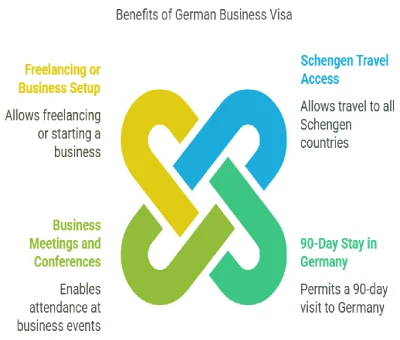
A short-stay Germany Business Visa can generally allow a stay of up to 90 days within a 180-day period, subject to the validity and conditions granted on the visa.
The actual permitted stay should always be checked on the visa sticker. Staying beyond the authorised period can create immigration problems.
The visa is intended for eligible short-term business activities. Depending on the circumstances, these can include corporate meetings, business negotiations, conferences, trade events and meetings with business partners.
The exact permitted activities depend on the applicable visa conditions. Regular employment should not be undertaken simply because the traveller holds a business visa.
Applicants generally need a passport, completed visa application, photographs, financial evidence, travel insurance, accommodation proof and documents establishing the purpose of the business trip.
| Document | Purpose |
|---|---|
| Valid Passport | Confirms identity and travel eligibility |
| Visa Application | Provides personal and travel information |
| Business Invitation | Establishes the German business purpose |
| Employer Letter | Confirms the reason for the business trip |
| Financial Evidence | Shows ability to fund the visit |
| Travel Insurance | Provides required medical coverage |
| Accommodation Proof | Shows where the applicant will stay |
An invitation from the German company or organisation you intend to visit can be an important supporting document for a business visa application. It should clearly explain the business relationship, purpose of the visit and expected dates.
The invitation should normally contain relevant details about the host organisation, including its address and the nature of the planned meetings or activities.
If you are travelling to Germany on behalf of your employer, an employer letter can help establish the purpose of your trip. It should explain why you are travelling, your position in the company and the expected duration of the business visit.
Where the employer is paying for the trip, this should also be clearly documented in the supporting paperwork.
Applicants must demonstrate that they have sufficient financial resources to cover their stay and return journey. There is no single balance that guarantees approval because the assessment depends on the proposed trip and the applicant's circumstances.
Bank statements and company financial documents should be consistent with the declared income, business activity and expected travel expenses.
Travel medical insurance is required for a Schengen visa application. The supplied source specifies coverage of 30,000 for the required medical protection.
The insurance should cover the applicable Schengen area and the complete period of the planned business trip. Applicants should verify the current insurance specifications before submitting their application.
A Germany-issued Schengen visa can generally permit travel within the Schengen Area during its validity, subject to the conditions of the visa and the applicable Schengen rules.
Applicants should ensure that their declared itinerary and main business purpose are consistent with the visa application. A Germany Business Visa should not be used to conceal a different primary travel purpose.
A short-stay Business Visa is not the same as a German employment visa. It is designed for permitted temporary business activities rather than taking up ordinary employment in Germany.
If you intend to take a regular job, work for a German employer or perform activities requiring work authorisation, you may need an appropriate work visa or residence permit.
A short-stay Business Visa should not automatically be interpreted as permission to establish and operate a business in Germany on a long-term basis.
Entrepreneurs planning to establish a business or become self-employed in Germany may need to use a separate residence route designed for self-employment or business establishment.
The supplied source states an estimated processing period of approximately 10–15 days.
Processing may take longer depending on the applicant's circumstances, additional checks, incomplete documentation or high application volumes. It is therefore advisable to apply well before the intended business trip.
The supplied source indicates that applicants can apply as early as six months before the intended trip and recommends applying at least three weeks before travelling.
Applying early gives you additional time to handle appointment availability, document requests or unexpected processing delays.
The supplied source lists the Germany Business Visa fee as €80.
Visa fees and application-centre service charges can change. Applicants should confirm the applicable fee when preparing the application rather than relying on an older fee figure.
Company financial documents can be important when the applicant is travelling on behalf of a business. The supplied checklist specifically mentions company bank statements for the previous three months.
These documents can help demonstrate the company's financial position and support the explanation of who will cover the costs of the business trip.
Eligible short-term business visits can include participation in conferences, trade events and other professional activities. The applicant should be able to demonstrate the genuine purpose of the visit.
Registration documents, invitations, conference details and correspondence with the host organisation can help establish the purpose of the proposed trip.
Problems can arise when the business purpose is unclear, supporting documents are incomplete, financial evidence is insufficient or information in different documents does not match.
| Potential Problem | Possible Concern |
|---|---|
| Unclear business purpose | The reason for travelling may not be sufficiently established |
| Weak financial evidence | Ability to fund the trip may be questioned |
| Missing invitation | The proposed business relationship may be difficult to verify |
| Inconsistent information | Can reduce the credibility of the application |
| Incomplete documents | The application may require additional information |
Applicants generally need to provide biometric information as part of the Schengen visa application process. This normally includes fingerprints and a photograph, subject to applicable exemptions.
Biometrics are submitted during the designated visa application appointment process. Applicants should follow the instructions provided for their application location.
WorldVisaHelp can help business travellers understand the documentation required for their proposed trip and organise their application materials.
Assistance can include reviewing financial evidence, business invitations, employer letters and other supporting documents, as well as providing guidance through the application process. The goal is to present a clear, consistent application that properly explains the purpose of the business visit.