

UK Tourist Visa for Indians
Indian citizens travelling to the UK for tourism or short business activities generally need to apply for the appropriate Standard Visitor Visa. Applicants should provide evidence supporting the purpose of their visit, financial circumstances, travel plans and their intention to leave the UK after the visit.
Typical supporting evidence includes bank statements, employment or business documents, travel history, accommodation details and an itinerary. Biometrics are submitted at a visa application centre in India.
What Can You Do on a UK Standard Visitor Visa?
A Standard Visitor Visa can allow eligible visitors to:
- Visit family and friends
- Explore tourist attractions across the UK
- Attend business meetings and conferences
- Participate in certain permitted training activities
- Undertake eligible short-term study of less than 6 months
- Attend cultural or other permitted events
- Receive certain medical treatment where visitor rules allow
A visitor cannot use the visa to take ordinary employment or seek a job in the UK.
Remote Work for Indian IT Professionals
The supplied source states that, under the UK Immigration Rules, visitors may undertake limited remote activities connected with their overseas employment, such as responding to emails, joining calls or attending remote meetings, provided this is incidental to the visit rather than its primary purpose.
This does not mean that a visitor can work for a UK employer or take up a UK-based role. An Indian employer's confirmation that the applicant remains employed and paid in India can help explain the arrangement.
Benefits of a UK Visitor Visa
| Benefit | Details |
|---|---|
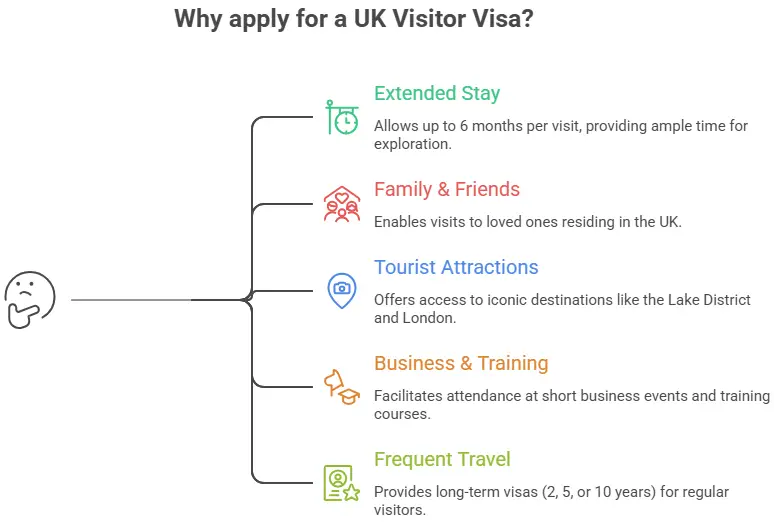
| Stay | Up to 6 months per visit |
| Tourism | Explore cities, historic sites and natural attractions |
| Family Visits | Visit eligible family members and friends |
| Business | Attend permitted meetings, conferences and events |
| Short Study | Certain courses lasting less than 6 months |
| Long-Term Option | 2, 5 or 10-year visitor visa validity for eligible applicants |
| Multiple Visits | Long-term visas can support repeated visits, subject to visitor rules |
The UK offers destinations ranging from major cities to historic towns and national parks, making it suitable for both short holidays and family visits.
Types of UK Visitor Visas
| Visa Type | Main Purpose |
|---|---|
| Standard Visitor Visa | Tourism, family visits, permitted business activities, events and eligible short-term study |
| Marriage Visitor Visa | Marriage or civil partnership activities in the UK |
| Long-Term Standard Visitor Visa | Frequent visitors who qualify for 2, 5 or 10-year validity |
| Transit Visa | Certain passengers travelling through the UK |
The correct category depends on the purpose of travel and the activities planned during the visit.
UK Visitor Visa Eligibility
Applicants should be able to demonstrate that they are genuine visitors and that they will comply with the conditions of their visa.
Key considerations include:
- Valid passport and appropriate travel document
- Sufficient funds for the proposed visit
- Genuine and clearly explained purpose of travel
- No intention to seek employment in the UK
- Evidence of strong connections with India
- Ability to pay for the journey and accommodation
- Intention to leave the UK at the end of the visit
- Satisfactory immigration, health and character history where applicable
UK Visitor Visa Requirements
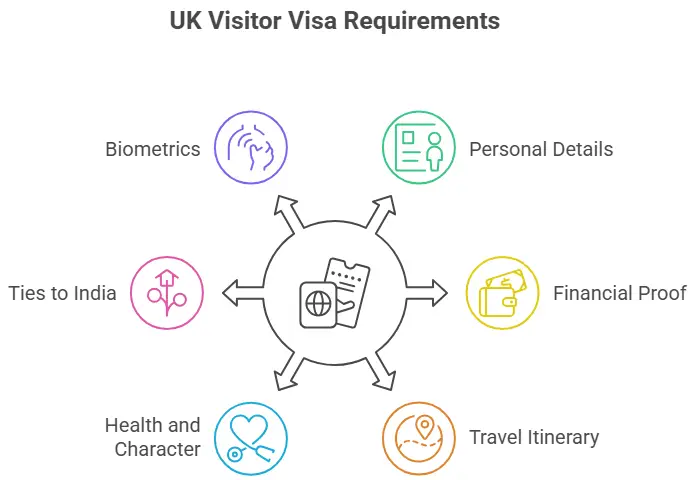
Applicants should prepare evidence that supports both their trip and their personal circumstances.
| Requirement | Examples of Evidence |
|---|---|
| Identity | Valid passport |
| Finances | Bank statements, salary slips, financial records |
| Employment/Business | Employment letter, payslips or business registration |
| Travel Plans | Itinerary and planned activities |
| Accommodation | Hotel booking or other accommodation evidence |
| Return Intent | Employment, family, property or other ties to India |
| Business Visit | Invitation, meeting details or relevant correspondence |
| Biometrics | Appointment and biometric submission |
The supplied source specifically recommends financial records, employment or business evidence, accommodation details, a cover letter and evidence showing the applicant will leave the UK.
UK Standard Visitor Visa – FAQs
Find answers to common questions about the UK Visitor Visa for Indians, including eligibility, documents, fees, processing time, permitted activities and reasons for refusal.
The UK Standard Visitor Visa allows eligible Indian nationals to travel to the UK for tourism, visiting family or friends, certain business activities, eligible short-term study, medical treatment and other permitted activities. A visitor can generally stay for up to 6 months per visit.
A UK Standard Visitor Visa generally allows a stay of up to 6 months per visit. Even if you hold a long-term visitor visa valid for 2, 5 or 10 years, the visa validity does not mean you can remain in the UK continuously for that entire period.
Depending on the circumstances, visitors can undertake activities such as tourism, visiting family and friends, attending permitted business meetings or conferences, taking certain short courses and participating in eligible cultural activities.
| Activity | Permitted Purpose |
|---|---|
| Tourism | Explore the UK and visit tourist attractions. |
| Family Visits | Visit family members or friends living in the UK. |
| Business | Attend permitted meetings, conferences and events. |
| Short Study | Undertake eligible courses lasting less than 6 months. |
| Cultural Activities | Attend eligible cultural or similar events. |
A Standard Visitor Visa does not provide general permission to work for a UK employer or seek employment in the UK. Visitors must remain within the activities permitted under the visitor rules. Taking up a UK-based job or filling a UK role is not permitted under the ordinary visitor route.
The supplied source states that limited remote activities connected with an overseas job may be permitted when they are incidental to the visit. Examples include responding to emails, joining calls and attending remote meetings for an Indian employer.
This does not allow visitors to work for a UK employer. The source also recommends evidence such as a letter from the Indian employer confirming continued employment and payment in India.
Applicants should prepare documents that establish their identity, financial position, travel plans and intention to return to India. The exact documents can vary depending on the purpose of travel and individual circumstances.
| Document | Purpose |
|---|---|
| Passport | Identity and travel documentation. |
| Bank Statements | Demonstrate available funds for the visit. |
| Employment/Business Proof | Shows your professional and financial circumstances. |
| Travel Itinerary | Explains your planned trip and activities. |
| Accommodation Evidence | Shows where you intend to stay. |
| Cover Letter | Explains the purpose and circumstances of the visit. |
| Biometrics Confirmation | Confirms your biometric appointment. |
The supplied source does not specify a single universal minimum bank balance. Applicants should instead demonstrate that they have sufficient funds to realistically cover their accommodation, transportation, daily expenses and return travel without relying on public funds.
Financial evidence should also be consistent with your income, employment and normal account activity. Large unexplained deposits can create concerns about the source of funds.
Demonstrating ties to India can help establish that your visit is temporary. Depending on your circumstances, evidence can include employment, salary records, family responsibilities, property ownership or other ongoing commitments in India.
The application is completed online. After submitting the application and arranging the required documents, applicants attend a biometric appointment at the relevant visa application centre in India.
The supplied source lists the Standard Visitor Visa fee at £135. It also lists different fees for long-term visitor visas and certain specialist visitor categories.
| Visa Type | Source-Listed Fee | Stay Per Visit |
|---|---|---|
| Standard Visitor | £135 | Up to 6 months |
| 2-Year Long-Term | £475 | Up to 6 months |
| 5-Year Long-Term | £848 | Up to 6 months |
| 10-Year Long-Term | £1,128 | Up to 6 months |
Visa fees can change, so the applicable fee should be confirmed before submitting the application.
The supplied source states that the standard processing time is around 3 weeks or 15 days from the biometrics appointment. Processing times can vary depending on application volume, individual circumstances and additional checks.
Applicants who need a faster decision may be able to use Priority or Super Priority services where available.
Priority processing is an optional paid service that can provide a faster decision where the service is available. The supplied source lists an additional £500 charge and a decision target of around 5 working days.
Super Priority is a faster optional processing service, subject to availability. The supplied source lists an additional £1,000 charge and a decision target of the next working day.
Faster processing does not guarantee visa approval. The application must still satisfy the applicable visitor requirements.
Yes. Long-term Standard Visitor Visas can have validity periods of 2, 5 or 10 years for eligible applicants. These visas can make repeated travel easier, but each individual visit generally remains subject to the maximum visitor stay of 6 months.
Certain short-term study can be permitted under the visitor route. The supplied source states that courses lasting less than 6 months may be possible where the course and institution meet the applicable requirements.
Anyone planning a longer course should consider the appropriate student immigration route instead of relying on a visitor visa.
Yes. Visiting family members and friends is one of the purposes covered by the Standard Visitor Visa. Applicants should clearly explain who they are visiting, where they will stay and how the visit will be funded.
Where applicable, host information and supporting documents can also be included with the application.
A visitor application can face refusal when the evidence does not establish a genuine temporary visit. Common concerns include inconsistent finances, unexplained bank deposits, weak ties to India, an unclear travel purpose, incomplete documents and inconsistencies between the application and supporting evidence.
| Potential Concern | Why It Can Matter |
|---|---|
| Unexplained Deposits | May raise questions about the source of funds. |
| Weak Ties to India | May make the temporary nature of the visit less clear. |
| Unclear Purpose | The reason for travelling may not be sufficiently established. |
| Inconsistent Documents | Conflicting information can undermine the application. |
| Previous Refusal Not Disclosed | Can create credibility concerns. |
The supplied source explains that "de facto residence" is not a fixed number of days in the rules. Instead, caseworkers may assess whether a pattern of repeated visits suggests that someone is effectively living in the UK rather than genuinely visiting.
Spending a large portion of the year in the UK, having weak ties to India or repeatedly visiting without clear purposes can create concerns. Evidence of employment, income, property and family ties can help establish genuine visitor circumstances.
The supplied source states that a Standard Visitor Visa does not permit marriage or civil partnership activities covered by the separate Marriage or Civil Partnership Visitor route. Applicants travelling specifically for this purpose should consider the appropriate visa category.
WorldVisaHelp provides structured assistance with the UK Visitor Visa process, from assessing the appropriate visitor route to organising documents and preparing the application.
| WorldVisaHelp Support | How It Helps |
|---|---|
| Visa Assessment | Helps identify the appropriate visitor route. |
| Eligibility Review | Reviews your travel purpose and circumstances. |
| Document Checklist | Organises financial, employment and travel evidence. |
| Application Assistance | Supports preparation of the online application. |
| Document Review | Helps identify missing or inconsistent information. |
| Cover Letter Guidance | Helps clearly explain your purpose of travel. |
| Application Follow-Up | Provides guidance regarding application updates. |